
When a Woke Icon Sacrifices Her Own Child to Angry Progressive Gods Just Because She Can

 S E E D E D C O N T E N T

I don't know how many times over the years I've been here, I've used ' FOR THE CHILDREN ' in a story about woke progressives and authoritarian-inclined socialists.
It's their rallying cry, their excuse for every abomination they attempt to shove down the throat of usually resistant citizens, and a smug rejoinder to anyone who questions them. Because, you know, saving that one mythical child is worth all the harm, restrictions, and loss of freedom that their plans bring to everyone else.
Which has always struck me as tremendously hypocritical, because there is no one more invested in using children as props to advance their causes than wokesters and socialists, while advocating for their extermination in the policies and causes they actually fight to the death for.
None of those AWFLs gathered outside the courthouse in their pink Lindsay Clancy T-shirts are weeping for those murdered babies. They are cheering the murder and encouraging more women to be like her. Kids bug you, and you're having an off day?
You know what to do, and don't you dare feel any worse about yourself for it. The ghouls in the grass will cheer for you.
Maura Healey signed legislation at a table surrounded by adoring females of various ages, which effectively allows women to execute newborns and yet pretends that her focus is on the health of those same newborns by threatening state nurse home visits for 'assessments.' I guess they have to make it past that critical stage at the hospital in Massachusetts first. You know - where mom changes her mind at the last minute.
Pick a lane, chicas.
Sacrificing children isn't merely a constant theme with the Moloch worshippers on the Left - they are more than happy to do it. It's better if they can experiment and use your child as a guinea pig, be it, say, 'transing' them without parental knowledge, or indoctrinating them in the various current fads they're into.
But they have absolutely no hesitation in throwing their own children into the communal stew pot if they believe the virtue signaling will gain them some sort of brownie points and higher social status at the next communist club meeting, or when comparing notes in line with another believer at Whole Foods or Costco.
Sure, their kids are collateral damage who wind up helping destroy the society their parents are busy tearing down - you can probably tote up trans Hollywood spawn on both hands in ten seconds without really trying. But it feels good for those folks to parade their little man in a dress and earn street cred for walking the walk, besides having the talk down pat.
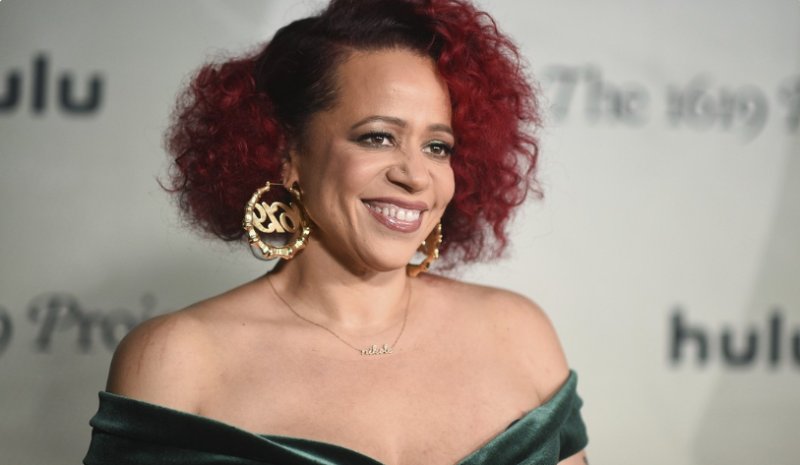
What is unusual in the Nikole Hannah-Jones case (the race-baiting 1619 Project author - 'nuff said there) that's causing such comment is that she's gone public. Hannah-Jones came forward in a NY Times piece to say the daughter she smugly sacrificed to the progressive virtue-signaling gods is really pissed at her all these years later. Why?
For sending her to some of the worst schools in New York City .
The daughter is correct. I called this at the time. pic.twitter.com/RDyLe6yuCd — Thomas Chatterton Williams (@thomaschattwill) September 20, 2026
She used her daughter as both a sop to her own ingrained prejudices and to earn those virtue-signaling ticky marks, purposefully choosing the lowest-performing schools to prove that 'middle-class parents' could raise the performance levels. This is a woman who could have easily afforded to give her child the best education she could from the very beginning.
Nikole Hannah-Jones is having a moment every parent dreads: questioning whether her parenting decisions have harmed her child. In her case, the evidence seems clear… it did.
In The New York Times Magazine , Jones, who makes a healthy six-figure salary, including receiving tens of thousands of dollars for paid speeches, decided to send her daughter to an economically deprived public school out of an obligation to the greater good instead of giving her daughter more advantages that could help her get into a better college and perhaps a high-paying career.
Jones first wrote about choosing her daughter’s school in 2016 , when she described her desire to send her child to public school but the difficulty of selecting a school in a “segregated city.”
“In a city where white children are only 15 percent of the more than one million public-school students, half of them are clustered in just 11 percent of the schools, which not coincidentally include many of the city’s top performers.”
This is one of the first fallacies of Jones’ logic on segregation to begin with: more than two-thirds of the city’s public school population at the time was Latino or black (the black student enrollment has since plummeted along with the overall student population); the city is not segregating the 15 percent as if they are a protected class. Jones is under the impression that there’s a constitutional right for every child to be in proximity to a white student. Perhaps it’s because they believe they can enshrine the child with the wisdom that comes from interacting with Black girl magic; perhaps it’s because she believes the city will invest more equitably if it knew white students were more fairly spread around, as if Caucasian students were a commodity.
This is inconceivable to me from personal experience, as this is precisely the dilemma major dad and I had when we were both on active duty in California. We made this choice. The Santa Ana school system at the time was so poor; it had one textbook for every three students, and, because the non-English-speaking student population was so high where Ebola would have gone to elementary school, the first half of every class was taught in English and the second half was spent reteaching it in Spanish.
No one learned anything.
What would have probably been vacation money went to private and Catholic schools for his early and elementary education, until we moved east eight years later. Hannah-Jones decided to do the opposite, though she could certainly afford the best for her child with little sacrifice to herself.
But that - her daughter - wasn't her priority.
“ Did you know my school was bad like this when you decided to put me here ?” she asked.
Yes. Your mother knew and did it purposefully.
...I had braced myself for this moment, spent nearly a decade expecting it, preparing for it. When Najya was entering pre-K, my husband, Faraji, and I decided to send her to the type of school that wealthier families with choices uniformly avoid — one that is low-income and mostly Black. Our decision had been informed by values shaped by my years of reporting on the enduring and too often seemingly hopeless battle for school integration.
Witness to woke-speak.
It informs her dialogue to this day.
...But my child just shook her head, her face a mask of disbelief, and something else: betrayal.
“ So you had money to send me to one of the best schools, and you chose not to?” she said, hurling her words. “Because other kids are disadvantaged, you didn’t want to put me in a great school? ”
Najya was asking what I’d accomplished by not choosing the “best” school for her. And the honest answer is, I don’t know. When it comes to the choices my husband and I have made about public education, these days I feel that I failed both my values and my child.
Oh, boohoo for you, Nikole. You see here who is meant to be the victim - Hannah-Jones.
Not the child whose mother had all the resources in the world, but kept her in crappy NYC schools. Not only for kindergarten, first or second grade, but for TEN YEARS.
Oops https://t.co/y3DMEctgGf — SarahLee (@sarailola) September 21, 2026
TEN YEARS
When the hell does Hannah-Jones wake up to the damage she's doing in this story?
Oh. NEVER.
And now she gets to write a mea culpa for the wokesters surrounding her who will glance over her daughter's heartrending...
...For a moment, Najya said nothing. Then she told me, “S ometimes I wish instead of always thinking about other kids, you would have thought about me. I never really got the education I wanted .”
This is when I would have normally responded with something like “I did think of you, and I knew you’d be OK” or “You are doing just fine at your selective high school.” But not this time. I just said, simply, “I acknowledge to you that I didn’t do the best for you, and I am so sorry.”
The line grew silent again. Then, “I am kind of happy that you are seeing this.”
...while applauding Hannah-Jones's own Greek tragic performance. Which she naturally turns into a ' but I'm sure glad my daughter can still hate white people .'
... She then said she was glad she had not spent her early years in a white environment as many of the Black students at her high school had, because she’d developed a strong sense of her identity and had the confidence to speak up against the casual racism they sometimes experienced . Najya said that spending the last two years in classrooms full of privileged kids had taught her that these students weren’t smarter or even necessarily better behaved than the kids she had gone to school with before; they just had more.
Nothing about the learning years her daughter will never get back.
Not that the city didn't spend a buttload ' not ' educating Hannah-Jones's daughter. Because they did.
Unbelievable. The government school that the 1619 Project founder admitted failed her daughter spends over $52,000 per student per year.
That's $676,000 for a K-12 "education."
Throwing more money at the problem won't fix it. pic.twitter.com/cUiUwdOI3f — Corey A. DeAngelis, school choice evangelist (@DeAngelisCorey) September 21, 2026
Money for nothing. But at least it wasn't a white school, right?
If you're surprised Miss 1619 is the kind of person who'd put her commitment to progressive racialism over the needs of her own child, you're either a compete moron or you really were born yesterday. https://t.co/JoF4ZR5bqx — Varad Mehta (@varadmehta) September 20, 2026
 Article is LOCKED by author/seeder
Who is online
97 visitors
[✘] Not Ms. Jones. She sent her kid to a struggling school (despite being given $52,000 a year, per student) and her kid paid the price. Hard to wrap your head around caring for your kid that little.
Fascinating story. [✘] progressives [✘] or [✘] teacher union officials once they have the means will not even consider putting their kids anywhere near a bad public school. Private all the way. As we saw with the national guard being called for a few dozens illegals on Martha's Vineyard, progressives are often (Again, not exclusively, heavens no!) of the "good for thee, not for me" variety.
And what did this accomplish?
Per GPT-6 Sol Medium:
chatgpt off
This is funny on its own. The "win" was making her a racial identarian.
Chat gpt
Another good essay:
I wonder how many conservatives ever actually looked at the 1619 Project. My semi-educated guess is zero.
Have you? It claims the revolution was fought to protect slavery. Is racist slop designed to pander to racial identarians on the left. Even the non-racist left found it incredibly dishonest. Here's one example from impeccably left wing Jacobin.
The 1619 Project was eight long essays almost all of which were not directly about the Founding Fathers. The part about the revolution was just a part of it.
=
CHAT GPT
If we separate what the 1619 Project got historically right from its more controversial interpretations, there is a substantial amount that is well supported by mainstream historical scholarship.
The American Historical Review commissioned a 19-scholar forum on the project. Its editors noted that, whatever the disagreements over particular claims, historians credited the project with bringing the history of slavery and Black Americans to a much larger public audience and opening new ways of thinking about the American past.
1. Slavery was central to American economic development
This is probably the strongest part of the project.
Slavery wasn't a peripheral institution confined to the South. Enslaved labor—particularly cotton production—became deeply connected to American and international commerce, finance, manufacturing, shipping and insurance.
The important distinction is that saying “slavery was enormously important to American economic development” is much less controversial than saying “American capitalism was fundamentally created by slavery.” The former has extensive historical support; the latter is an interpretation over which historians disagree. Even critics of 1619 acknowledge that studying slavery's economic role is essential.
2. Slavery existed alongside the nation's founding ideals
The United States proclaimed principles of liberty and equality while millions of people were enslaved.
That's not a controversial discovery of the 1619 Project—it is an undeniable historical contradiction.
The project was right to emphasize that the American founding cannot be understood solely through the Declaration of Independence, Constitution and revolutionary ideals without also considering slavery, racial hierarchy and the status of enslaved people.
Thomas Jefferson is an obvious example: he wrote that “all men are created equal” while enslaving people himself.
3. Enslaved people were active historical actors
One valuable contribution of the project was shifting attention away from treating enslaved people merely as victims of a system.
They:
That perspective is consistent with decades of scholarship in African-American history.
4. The Civil War cannot be separated from slavery
This is another area where the broader 1619 emphasis is justified.
There were numerous political, constitutional and economic issues surrounding the Civil War, but slavery and its expansion were fundamental to the sectional conflict.
The seceding states themselves provide unusually strong evidence because several explicitly identified slavery as a reason for secession. Mississippi's declaration, for example, stated that its position was “thoroughly identified with the institution of slavery.”
So you don't need the stronger 1619 interpretation of American history to establish the basic point:
The United States cannot adequately explain the Civil War without slavery.
5. Reconstruction and its collapse matter enormously
The project also deserves credit for emphasizing what happened after emancipation.
Ending slavery did not immediately produce racial equality.
The country went through:
emancipation → Reconstruction → Black political participation → white Southern resistance → disenfranchisement → segregation → Jim Crow
That sequence is essential to understanding American history.
And the consequences weren't confined to the South. Northern and Western states had their own forms of racial discrimination and segregation.
6. The legacy of slavery didn't simply disappear in 1865
This is perhaps the most important distinction between history and politics in the 1619 debate.
It is historically defensible to investigate whether institutions that developed during or after slavery contributed to later racial disparities.
For example:
There is extensive historical evidence for these things.
The disagreement begins when historians and social scientists move from:
to:
The second proposition requires considerably more evidence and is much more contestable.
7. The project was right to challenge an overly sanitized version of American history
This is where I think the project had its greatest public-history success.
There was—and remains—a tendency in some presentations of American history to tell a sequence like:
1776 → Constitution → Civil War → emancipation → civil rights → present
while giving comparatively little attention to the experience of enslaved people.
The 1619 Project forced a much larger audience to ask:
That's a legitimate and valuable historical question.
And interestingly, this doesn't require rejecting 1776.
You can simultaneously believe that:
1776 was a foundational moment in American history
and
1619 represents an enormously important earlier moment in the history of Africans and slavery in English North America.
Those aren't necessarily mutually exclusive propositions.
Where I would draw the line
The strongest version of the 1619 Project sometimes moves from documented history into large causal interpretations.
The most famous example is the original claim that one of the primary reasons colonists declared independence was protecting slavery.
That claim generated substantial criticism from historians. The New York Times subsequently clarified the statement by changing it to say that protecting slavery was one of the primary reasons for “some of the colonists,” particularly those in the Southern colonies.
That's an important distinction.
Similarly, historians disagree about how much weight should be given to slavery in explaining the development of American capitalism. The American Historical Review forum explicitly describes these disputes as involving “interpretive overreach and factual slippage,” while also recognizing the project's contribution to public understanding.
So my bottom line would be:
I didnt read all of it by any means, it was many thousands of words (and that is just the New York Times version, there also a full length book) but I most certainly did look at it.
Explains you relying on AI instead of actual knowledge of the subject.
So lying to create a fake foundation myth for our country is okay for historians because they say other things that aren't lies.
LOL.
Maybe you can publish an article about what myths the Smithsonian has perpetrated?
It is funny... Some people want us to discard everything we learn while seeking the facts if one part is proven false.
Prove each claim. Don't worry if it takes time to reach a conclusion.
Sean is defending an article that asks us to conclude:
So Sean’s defense asks us to accept the article’s claim that a mother knowingly put her child in a school she knew would provide an insufficient education, seeking progressive approval for doing so.
Where is the evidence for that? Hannah-Jones says the school had a strong principal when Najya enrolled, that Najya initially seemed to be learning on grade level, and that the family hoped its involvement would help improve the school for other children. She knew the school carried risks. That does not mean she knew the particular failures Najya would encounter.
None of this means the parents made the right choice. Once serious failures became apparent, their decision to stay deserves scrutiny. But criticism of that decision does not prove that Hannah-Jones chose the school for social status, knew in advance how Najya’s education would suffer, or that her decision tells us how progressives generally treat their children. Those are separate claims. Prove them.
She admitted she did it and publicized it while doing so
That does not mean she knew the particular failures Najya would encounter.
Lol. No is accusing of her having the ability to tell the future. It's like telling a kid to play in traffic. The parent doesn't "know" they will be killed by a car, and it's possible that the kid could be killed by a car even without playing in traffic, but every sentient person in the world understands putting a child in a terrible school (terrible despite massive funding b/c progressive policies have ruined education) increases the likelihood of a bad outcome substantially.
Many conservatives don't like learning things they hadn't already been taught in Sunday school. [Deleted][✘]
I hope the child remembers this when it is time to pick a nursing home for Hannah-Jones